
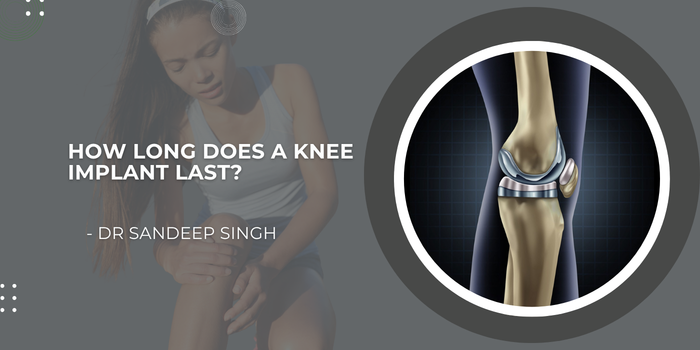
Most knee implants last between 15 to 20 years. With advanced materials and improved surgical techniques, over 90% of modern knee replacements function well beyond the 15 year mark, and a significant percentage go on for 25 years or the full remainder of a patient’s lifetime. Longevity depends on implant quality, patient weight, activity levels, and how well post-operative care is followed in the years after surgery.
According to Dr. Sandeep Singh, orthopedic doctor in Bhubaneswar, “A knee implant is not a permanent fix by default. It is a long-term solution that rewards the right care. Patients who manage their weight, stay active sensibly, and attend follow-ups consistently give their implant the best chance of lasting a lifetime.”
What Factors Determine How Long a Knee Implant Lasts?
People often assume the implant itself decides everything. It doesn’t. The implant is one piece of a larger picture, and several things outside the operation room matter just as much in the long run.
Material quality has genuinely changed the numbers. Older implants wore out faster because the materials simply weren’t built for decades of daily load. Modern components use highly cross linked polyethylene, cobalt chromium alloy, and ceramic coated surfaces that resist wear in ways the previous generation couldn’t match. The designs have improved too. Load spreads more evenly now, which means no single point of the implant takes a disproportionate beating.
Weight is the most controllable variable patients have. Every additional kilogram increases the force passing through that joint with every step taken. Patients who gain considerable weight after surgery are placing measurably more daily stress on the prosthesis. Over years, that adds up faster than most people expect.
The type of activity matters more than how much activity. Walking, swimming, cycling all keep the surrounding muscles strong without putting harsh repetitive impact through the joint. Running and jumping are a different story. They create the kind of mechanical stress that accelerates component wear noticeably over time.
Younger patients face a specific challenge. A 55 year old getting a knee replacement is likely to be more physically active over the next two decades than a 70 year old receiving the same procedure. More activity means more load cycles on the implant over its lifetime. This is not a reason to delay surgery. It is a reason to have an honest conversation about realistic expectations and lifestyle modifications before the procedure.
Surgical precision at the time of implantation sets the trajectory. Correct alignment changes how load is distributed across the components for the entire life of the implant. Small positioning errors at surgery translate into accelerated wear patterns years down the line. Robotic assisted knee replacement improves alignment accuracy considerably compared to conventional manual techniques.
What Are the Signs That a Knee Implant May Be Wearing Out?
Most implants give signals well before they fail. Recognising those signals early is worth a lot. Planned revision surgery produces significantly better results than surgery done in response to a crisis.
Pain coming back after years of being gone. This is usually the first thing patients notice. Not sudden severe pain, but a gradual return of discomfort during activity that had been absent for years. It deserves attention rather than a wait and see approach.
Swelling without a clear reason. Some swelling in the months immediately after surgery is entirely expected. Swelling that reappears years later with no injury or illness behind it is a different matter. It can indicate that wear particles have begun accumulating inside the joint space.
Stiffness developing progressively. A well placed implant allows comfortable movement through a reasonable range. When stiffness starts building slowly, years after surgery, component loosening or scar tissue around the joint are the most common explanations.
Grinding or a feeling of instability. Occasional clicking is common and usually harmless. A grinding sensation, or a feeling that the knee is giving way under load, is worth investigating promptly rather than waiting to see whether it resolves on its own.
Changes showing up on routine X-rays. Regular follow-up imaging catches problems that patients cannot feel yet. Loosening at the bone implant interface, subtle shifts in component position, or early bone loss around the prosthesis all appear on X-rays before they become symptomatic.
For a closer look at what the weeks immediately after surgery involve, the post-op recovery guide covers the early period in practical detail.
Why Choose Dr. Sandeep Singh for Knee Replacement in Bhubaneswar?
Implant longevity starts in the operating theatre and Dr. Sandeep Singh has spent fifteen years getting that part right. MS Ortho, MRCS Glasgow, MRCS UK, FRCS London in Primary and Revision Joint Replacement, Sports Injury Fellowship under Prof. Fares Haddad in the UK. He heads Sports Injury and Rehabilitation at CARE Super Specialty Hospital Bhubaneswar and was the first to bring FASTTRACK joint replacement to Odisha. Robotic assisted surgery, precise implant positioning, and a structured post-operative plan are standard here. Patients walk within hours of the procedure. Follow-up is built into the plan from day one, not added later as an afterthought. Call +91 8658044823 to book a consultation.
Frequently Asked Questions
- Can a knee implant last a lifetime?
For older patients or those with lower activity levels it genuinely can. Many implants function well past the 25 year mark without needing revision. How well a patient manages weight and activity levels after surgery plays a large role in whether that happens. - What happens when a knee implant wears out?
Revision surgery replaces the worn components. It is more involved than the original procedure but produces good outcomes when it is planned ahead of time rather than performed as an emergency response to failure. - Does age affect how long a knee implant lasts?
It does, in an indirect way. Younger patients tend to be more active, which means more daily load cycles on the implant across its lifetime. The answer is not to delay surgery but to go in with realistic expectations and a clear plan for managing activity levels afterward. - How do I make my knee implant last longer?
Keeping weight in a healthy range, choosing low impact physical activity, attending regular follow-up appointments, and avoiding repetitive high impact movements are the four habits that most reliably extend implant life.
References
How long does a knee replacement last? Systematic review and meta-analysis — https://pmc.ncbi.nlm.nih.gov/articles/PMC6381229/
Long-term outcomes of knee arthroplasty: minimum 15 year follow-up — https://ncbi.nlm.nih.gov/pmc/articles/PMC10009351
Disclaimer:
This blog is for educational purposes only and is not a substitute for professional medical advice.