
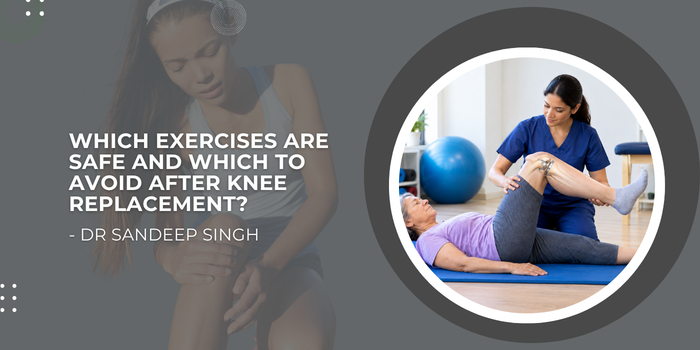
Knee replacement rehab is mostly about timing. Ankle pumps, heel slides and short walks are generally safe from the start, but running, jerky sports and sudden twists usually have to wait. Rehab after joint replacement depends on how healing progresses, which is why two patients in the same week can follow quite different plans. This article walks through joint surgery rehab after a knee replacement, covering what usually helps and what to hold off on.
According to Dr. Sandeep Singh, Consultant Orthopedic Surgeon at CARE Super Specialty Hospital, Bhubaneswar, “Recovery rarely moves in a straight line. In rehab after joint replacement, the aim is steady, supervised movement that suits the stage of healing. Gentle bending and strengthening exercises are usually encouraged, but sports that jerk or twist the knee are generally put off. What’s suitable depends on the person, so the plan is set case by case.”
Questions about rehab after knee surgery? book an Appointment or Call to clear doubts
Which Exercises Are Generally Safe After Knee Replacement?
Early exercises are gentle and repeated often. Your physiotherapist adds to them step by step.
- Begin with ankle pumps. Moving the foot up and down keeps blood flowing and helps lower the risk of clots. You can do it lying flat.
- Heel slides ease the bend back. Sliding the heel towards you gently bends the knee, and tightening the thigh muscle wakes up the quadriceps. Both may feel uncomfortable at first.
- Straight leg raises add strength. Lifted slowly while lying down, they work the thigh muscle that supports the new knee. Keep it smooth, never jerky.
- Walking is part of the plan. The NHS says to use crutches or a walking stick at first, and suggests trying walking without an aid after about six weeks if you feel ready. Pace yourself.
- Your type of surgery shapes the routine. Total and partial replacements don’t follow the same timeline, so your plan may differ from someone else’s. Our knee replacement page covers the total knee procedure and recovery in more detail.
Your physiotherapist shows you each exercise before you try it at home.
As your knee heals, you can gradually return to your usual activities. However, some movements and sports should be avoided to protect your new knee.
Which Activities Should You Avoid After Knee Replacement?
Running and high-impact sports. Hold off on running and anything that involves sudden stops or twisting. Once you’ve healed enough, swimming and golf are easier on the new joint, and most people can go back to them.
Contact sports and downhill skiing. A fall is the last thing a new knee needs, so these are usually best left behind for good.
Twisting, kneeling and crossing your legs. Try not to pivot on the operated knee, and skip kneeling until your surgeon gives the go-ahead. For the first six weeks, keep your legs uncrossed when you sit.
Heavy lifting and stairs. Avoid heavy lifting and strenuous household chores for a few months. For the first two months, cut down on repeated trips up and down long staircases.
Doing too much too soon. Feeling good is not the same as being healed, so build up activity bit by bit. Sharp pain, or pain that keeps getting worse, is your cue to stop, not push through.
The good news is that most of these restrictions ease as your knee heals. If you’re wondering what life looks like a few months down the line, our guide on resuming normal activities 4 months after total knee replacement is a good next read. And before you return to anything strenuous, check with your surgeon first.
What Decides How Fast You Can Progress?
There’s no fixed calendar for joint surgery rehab. Healing sets the pace, and your care team reads it.
- The type of surgery. A partial knee replacement often means a quicker recovery than a total one, so exercise timelines (and things like when you can drive) can differ. Your surgeon will tell you which applies to you.
- How the knee responds. Some swelling and soreness are common early on. Sharp or worsening pain is worth mentioning to your surgeon.
- Strength and movement so far. Physiotherapists usually step things up as the thigh muscles get stronger and the bend improves. Two people in the same week can end up doing different exercises.
- Time since surgery. The early weeks are mostly gentle movement, with more strengthening later. Our blog on the first month after knee replacement describes that stage in more detail.
- Your surgeon’s clearance. Kneeling, heavy lifting and sport should be resumed only after your surgeon confirms it is safe to do.
Even patients who undergo knee replacement in the same week can progress at different rates, which is why the rehabilitation plan is personal.
Key Takeaways
- Gentle, guided exercises such as ankle pumps, heel slides and short walks usually help a new knee recover.
- Running, jerky sports, twisting and heavy lifting generally wait until your surgeon says it’s safe.
- Sharp or worsening pain is worth mentioning to your surgeon, not pushing through.
Learn more about knee replacement and recovery in our health articles.
Frequently Asked Questions
- Should I be walking after a knee replacement?
Yes, walking is part of recovery, with crutches or a stick at first. - Can I kneel after knee replacement?
Not until your doctor says it’s safe. - Is running allowed after knee replacement?
Generally not, so check with your surgeon before trying. - Is swimming okay after a knee replacement?
It’s easier on the knee than most sports, but wait for your surgeon’s go-ahead.
References:
1. Activities After Total Knee Replacement – AAOS Explains which activities and exercises can help restore mobility after knee replacement and which high-impact activities, such as running and jumping, may put excessive stress on the new joint.
2. Recovering from a Knee Replacement – NHS Covers post-surgery exercises, walking, daily activities, and precautions to follow during recovery to support safe movement and reduce complications.
Disclaimer
This blog is for informational purposes only and is not a substitute for professional medical advice. Please consult a specialist about your individual case.