
Learn common types of bone fractures including Open, Closed & Displaced Fractures with Dr Sandeep Singh, a leading Orthopedic Doctor in Bhubaneswar.
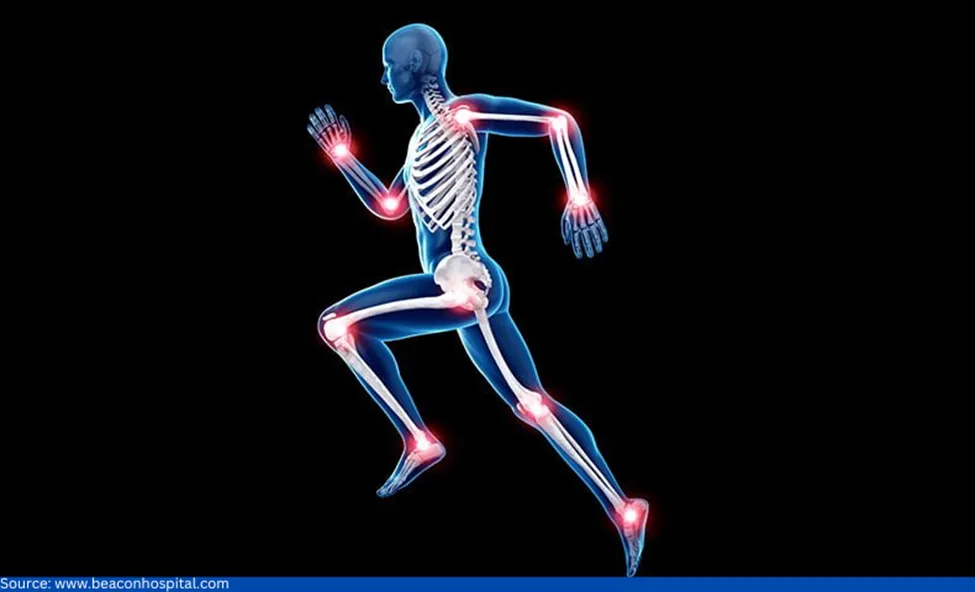
Our bones support our bodies and contribute to our shape. Despite being relatively light, bones are sufficiently strong to support your entire weight.
Bones also protect your body’s organs. Your skull shapes your face while safeguarding your brain. The spinal column, or backbone, guards your spinal cord, which serves as a communication line between your brain and body. The cage formed by your ribs protects your heart and lungs, the pelvis aids in securing your bladder and a portion of the intestines, and, in women, it shields the reproductive organs.
Common types of bone fracture can occur in these critical areas, especially if bones are not properly cared for or are subjected to excessive stress.
Dr. Sandeep Singh, recognized as one of the best orthopedic doctors in Bhubaneswar, says that bones not only support your body weight but also facilitate movement, generate and maintain blood cells, store essential minerals, and protect your internal organs.
And that is why it is crucial that we take care of our bones and protect it from injury and fracture.
What is a bone fracture?
A bone fracture, also referred to as a broken or fractured bone, is a common injury. Your body contains more than 200 bones; thus, many variants and different sorts of fractures exist. The type of fracture you have and how it happened can determine how you are treated and how quickly you heal.
The 3 main categories of fractures are open, closed, and displaced fractures, and we shall discuss them in this article.
Common Types of Bone Fractures
The three most common types of bone fractures are as follows:
Open fracture
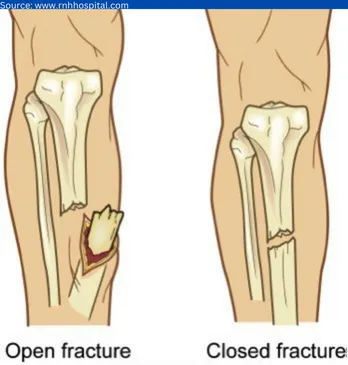
An open fracture is a shattered bone that has broken through the skin. In some instances, the wound is such that you can see the bone. Dr. Sandeep Singh, known to be the best orthopedic doctor in Bhubaneswar, cautions that open fractures might develop an infection that needs to be cleaned out if not treated surgically at the earliest.
Surgery is often used to repair open fractures. Debridement, the first step in fracture treatment, involves clearing the wound of all foreign substances and diseased tissue. The surgeon inserts screws and rods in the bone after the wound has been cleaned up to keep it in place while it heals.
Closed fractures
Closed fractures are the ones that do not cut through the skin, and the risk of infection is lower than open fractures. Even though closed fractures may not be typically seen as emergencies, they nonetheless need to be treated promptly.
If the injury is not addressed in time, fracture blisters can develop within 2 days after the accident due to the soft tissue damage caused by these fractures.
Fractures can be treated in various ways based on the extent of the damage.
Imaging tests, like an x-ray, are carried out to evaluate the damage and make treatment decisions.
Dr. Sandeep Singh adds that the most usual fracture treatment method is to immobilize the wounded area with a cast; however, surgery may also be necessary in some cases to realign the bone. Having treated countless people with bone injuries, Dr. Singh is frequently called the best ortho doctor in Bhubaneswar.
Displaced fracture
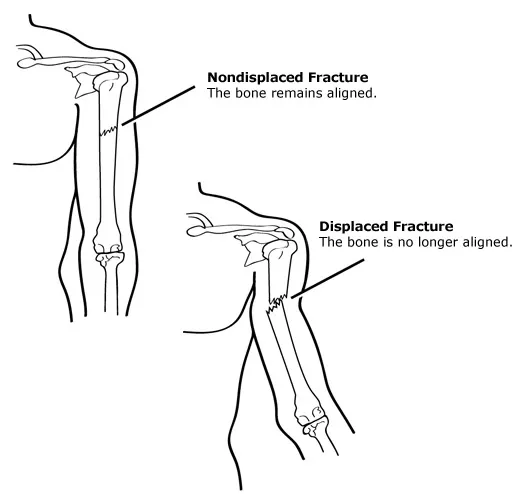
A displaced fracture is a broken bone that shifts out of its position, creating a space so that the 2 ends are no longer in a straight line. This type of fracture is harder to treat with just immobilization and will usually require surgery.
Subcategories
In addition to the above, there are subcategories of broken bones based on the characteristics of the bone fractures. You can see examples of a few in the image below.
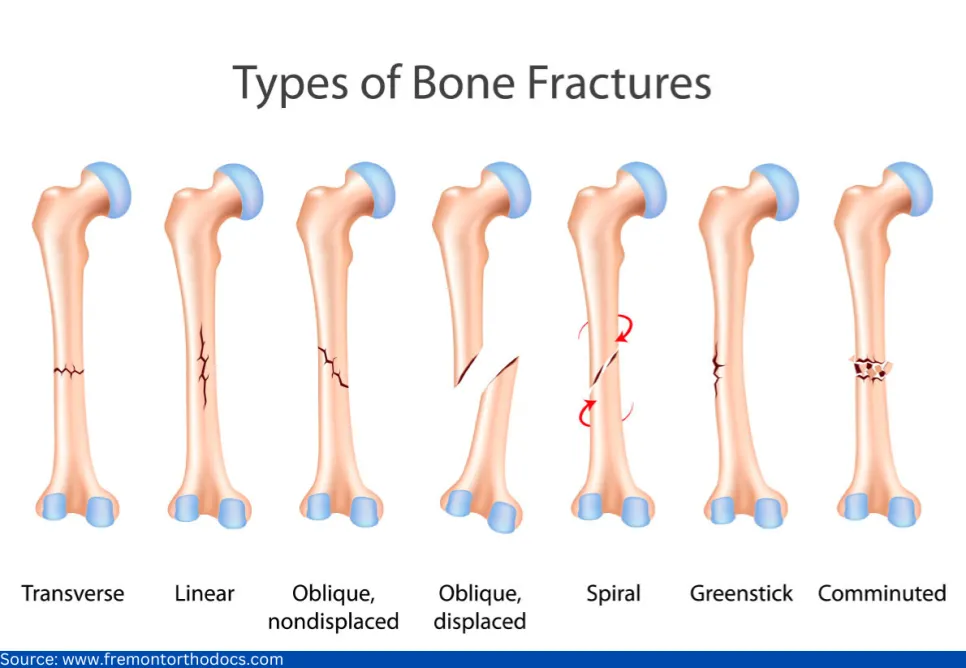
- Avulsion fracture: A connective tendon or ligament tears a fragment of bone away from the rest of the bone in an avulsion fracture.
- Comminuted fracture: A comminuted fracture is when the bone fracture shatters into 3 pieces or more.
- Compression fracture: A bone is crushed or flattened in a compression fracture. The spine is where this fracture occurs most frequently.
- Greenstick fractures: Bones that bow or bend but do not entirely break are said to have greenstick fractures. Children who have not yet developed fully solid bones are susceptible to these fractures.
- Impacted fracture: An impacted fracture occurs when a portion of your bone is pushed into another fractured bone by the sheer force of the injury or impact.
- Oblique fracture: An oblique fracture is when a break runs diagonally across your bone.
- Pathological fractures: Pathological fractures occur when the bone is already weakened by an underlying condition (such as cancer). According to Dr. Sandeep Singh, often called the best orthopedist in Bhubaneswar, pathological fractures can occur with little to no stress or force of contact.
- Spiral fracture: A fracture line that spirals or coils down and wraps around the bone is known as a spiral fracture.
- Stress fractures: A hairline crack in the bone brought on by repeated pressure or strain. These fractures are common among athletes.
- Transverse fracture: A transverse fracture is one in which the bone is split horizontally.
Conclusion
Despite their sturdiness, it is very common for bones to fracture due to injury or impact. You should seek medical attention as soon as possible since a shattered bone can be excruciating. If you cannot see a doctor immediately, you will need to practice self-care until you can seek medical attention. In most cases, you will need to receive treatment before returning to your regular activities.
If you have blueness, edema (swelling), stiffness, pins and needles, numbness, or increased discomfort, please seek medical attention as soon as possible. Most fractures may be found by examining the wound and taking X-rays. Please make an appointment with Dr. Sandeep Singh, an accomplished orthopedic surgeon in Bhubaneswar, known for his competent and successful treatments.
Reference: