You break a bone, get the X-ray, get the cast or the brace, and then you’re just supposed to wait? That’s usually how it feels. But your body isn’t waiting around. It started fixing the break before you even left the hospital.
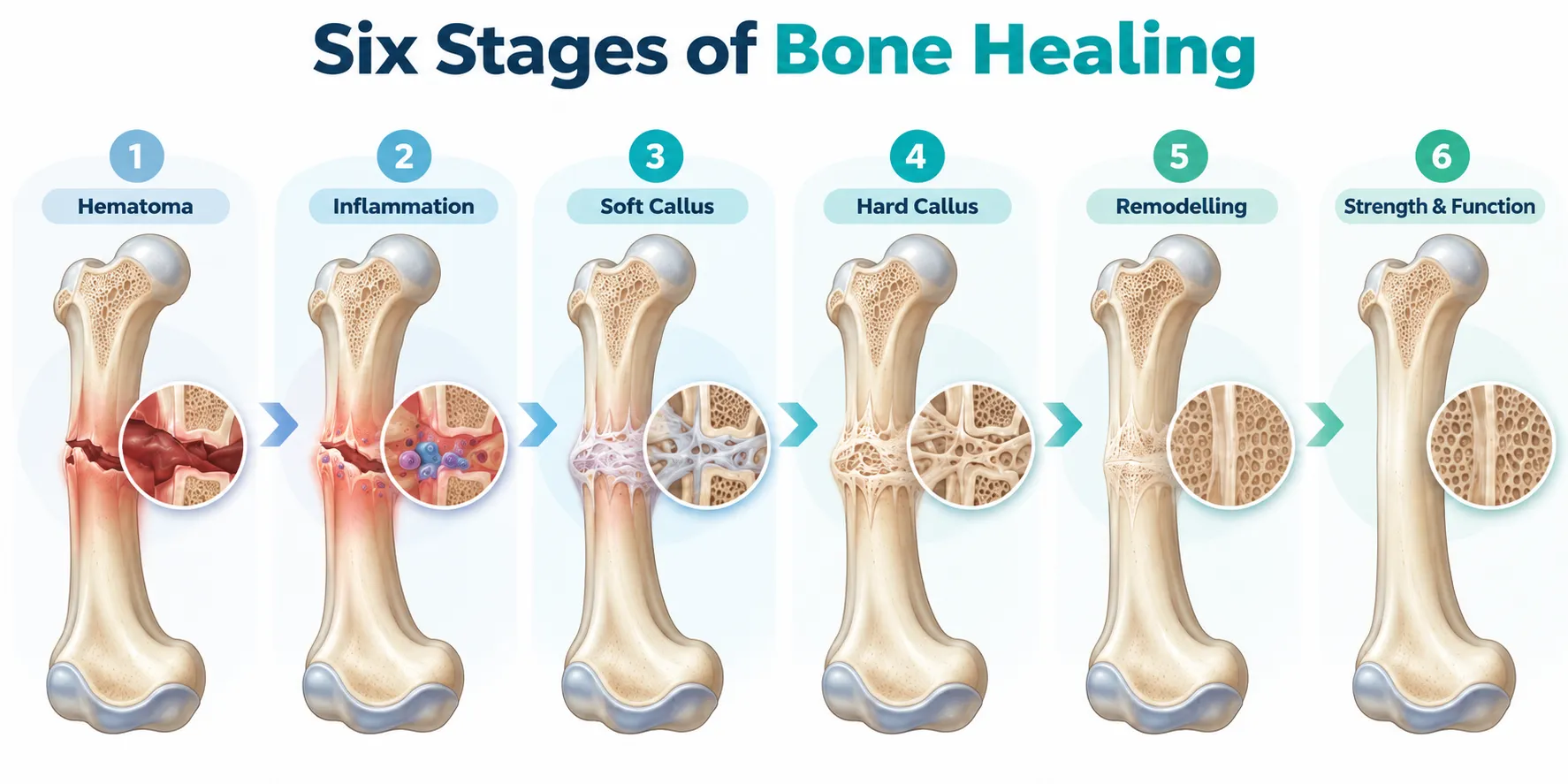
Doctors typically describe this repair process in terms of the 6 stages of bone healing. It’s not a strict clock; some people move through these faster, some slower but the order tends to stay the same.
“Every fracture heals differently. What matters is detecting complications early and giving the bone proper support. If recovery isn’t going as expected, get it checked rather than waiting.”— Dr Sandeep Singh,Orthopaedic Doctor in Bhubaneshwar
What Happens During Bone Healing?
You break a bone, get the X-ray, get the cast or the brace, and then you’re just supposed to wait? That’s usually how it feels. But your body isn’t waiting around. It started fixing the break before you even left the hospital.
Doctors typically describe this repair process in terms of the 6 stages of bone healing. It’s not a strict clock; some people move through these faster, some slower but the order tends to stay the same.
“Every fracture heals differently. What matters is detecting complications early and giving the bone proper support. If recovery isn’t going as expected, get it checked rather than waiting.”— Dr Sandeep Singh,Orthopaedic Doctor in Bhubaneshwar
Book an appointment with an orthopedic doctor in Bhubaneswar to understand how your bone is healing and plan the next steps.
6 Stages of Bone Healing After a Fracture
1. Formation of a Blood Clot (Hematoma)
In the first few hours, the blood accumulates at the break and coagulates. This is referred to by doctors as a “hematoma.”
It does not look very nice, but it’s where it all begins. This clot attracts cells and growth factors to initiate the entire repair process.
2. Inflammation Begins
After that comes swelling and yes, it can be uncomfortable, sometimes worse than the fracture itself felt at first.
This is the cleanup phase. The body is removing old and damaged tissue and preparing the area for new growth. It doesn’t sound so nice, but it’s not really an option to skip it.
3. Formation of a Soft Callus
By around the one- to two-week mark, a soft callus shows up. It’s spongy and not particularly strong, but it does the job of loosely holding the broken pieces together.
4. Formation of a Hard Callus
Over the following weeks, calcium gets deposited into that soft tissue and it starts to firm up. By this point it’s starting to resemble actual bone.
5. Bone Remodelling
This is the long one. Remodelling can range from a few months to a year and it’s easy to get impatient during the process.
However, it is being slowly sculpted as if by a sculptor, the bone being carved away at fat, smoothed and reshaped back into its original shape. It may be one of the less talked about stages of fracture healing, as there doesn’t seem to be anything spectacular happening on the outside.
6. Restoration of Bone Strength and Function
Eventually the bone gets its strength back, and normal movement returns. This is usually when patients get the green light to go back to regular activity.
Schedule an appointment for an orthopedic evaluation and get the right guidance for your healing journey.
How Long Does a Broken Bone Take to Heal?
Most straightforward fractures take somewhere around 6 to 8 weeks to heal structurally. But the full fracture recovery process getting back full strength and range of motion- can easily run a few more months past that.
What Factors Can Affect Bone Healing?
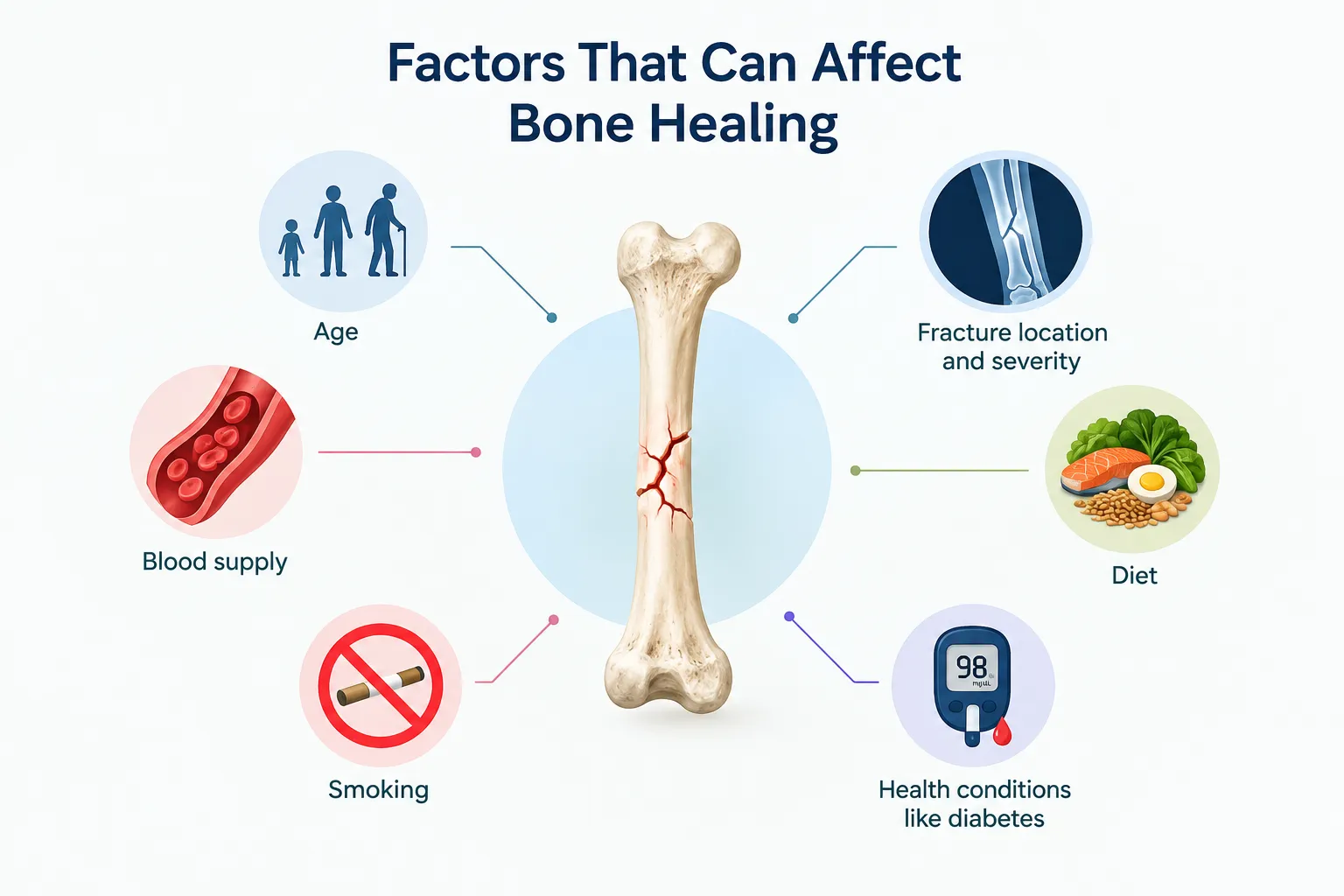
Recovery speed isn’t fixed, and it depends on things like:
- Age (younger bones heal faster, generally)
- Where the fracture is and how severe it was
- Blood supply to that part of the body
- Diet
- Smoking, which slows things down more than people expect
- Health conditions like diabetes
A lot of how bones heal after a fracture comes down to what happens during recovery, not just the injury itself.
What Are the Signs of Bone Healing?
A few things to look for:
- Pain and swelling easing up gradually
- Being able to bear a little more weight over time
- X-rays showing visible progress
These are good signs of bone healing. If pain sticks around or things still feel unstable well past when they should, that’s worth mentioning to your doctor.
How Can You Support Bone Healing?
There’s actually a fair amount you can do:
- Eat enough calcium and protein
- Cut out smoking, or at least cut back
- Stick to weight-bearing restrictions even when it’s tempting not to
- Don’t skip follow-up appointments
- Start physiotherapy once cleared, and don’t rush it
If you’re unsure what your recovery should look like day to day, it’s worth asking the clinic directly rather than guessing.
When Should You See an Orthopedic Doctor?
If pain is getting worse instead of better, swelling isn’t going down, or things just don’t seem to be progressing, don’t wait it out hoping it resolves on its own. Dr. Sandeep Singh, an orthopedic doctor in Bhubaneswar, can assess your fracture recovery and help determine whether further care is needed. Booking a visit sooner rather than later is the safer call.
Book an appointment today to have your recovery assessed by an orthopedic specialist.
Frequently Asked Questions
Can a fracture heal without a cast?
Sometimes minor, stable fractures can heal with rest and bracing alone. It depends a lot on the specific break.
Does age affect bone healing speed?
Yes. Kids heal noticeably faster, and healing tends to slow down with age.
Is it normal to feel pain during bone remodelling?
Mild stiffness can hang around during this stage. Sharp or worsening pain shouldn’t be ignored, though.
Can poor nutrition delay bone healing?
It can low calcium, protein, or vitamin D intake tends to slow recovery down.